
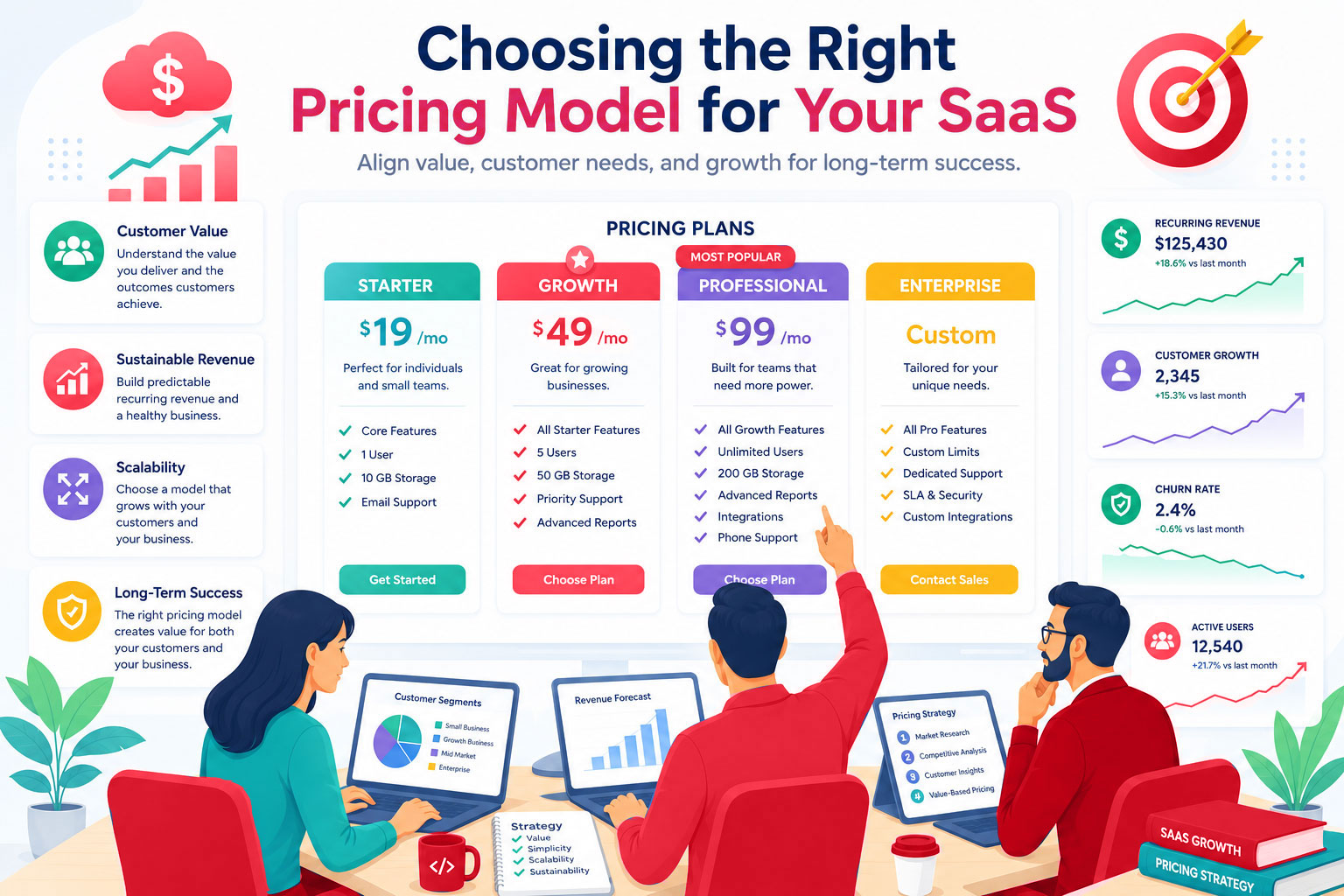
Pricing is one of the most important decisions a SaaS business will make. It influences revenue, customer expectations, product positioning, and long-term growth. While features and technology often receive the most attention, a thoughtful pricing strategy can have an equally significant impact on the success of a platform.
The right pricing model creates a balance between delivering value to customers and building a sustainable business. This guide explores common SaaS pricing approaches and practical considerations for selecting the model that best supports your goals.
Start with Customer Value
Effective pricing begins with understanding the value your product delivers.
Before setting prices, consider:
- What problem does your platform solve?
- How much time, money, or effort does it save customers?
- What outcomes can customers achieve by using it?
- How does it compare to alternative solutions?
When pricing reflects the value customers receive, it becomes easier to communicate and justify your offering.
Understanding Common SaaS Pricing Models
There is no universal pricing structure that works for every SaaS product. The best model depends on your audience, market, and product complexity.
Subscription-Based Pricing
Subscription pricing remains the most common SaaS model.
Benefits include:
- Predictable recurring revenue
- Easier financial forecasting
- Strong alignment between customer success and business growth
Monthly and annual subscriptions are widely accepted and provide flexibility for different customer preferences.
Tiered Pricing
Tiered pricing offers multiple plans with varying features and limits.
Advantages include:
- Serving different customer segments
- Providing clear upgrade paths
- Allowing businesses to start small and grow over time
Many successful SaaS platforms use three or four tiers to balance simplicity and flexibility.
Usage-Based Pricing
Usage-based pricing charges customers according to their consumption.
Examples include:
- Number of API requests
- Storage usage
- Active users
- Processed transactions
This model creates a direct connection between product usage and cost, making it attractive for businesses with variable demand.
Hybrid Pricing
Some SaaS companies combine multiple approaches.
For example:
- A base subscription fee
- Additional charges for usage or premium features
Hybrid models can provide flexibility while maintaining predictable revenue streams.
Keep Pricing Simple
Complex pricing often creates friction during the buying process.
Customers should be able to understand:
- What each plan includes
- How upgrades work
- What additional costs may apply
- Which plan is most suitable for their needs
Clear pricing builds trust and reduces confusion, helping potential customers make decisions with confidence.
Design for Growth
Your pricing model should support both current customers and future growth.
Consider:
- Whether customers can upgrade easily
- How new features will be introduced
- Whether enterprise plans may be needed later
- How pricing can evolve as your platform matures
A scalable pricing strategy helps prevent major restructuring as your business expands.
The Role of Support and Updates
When evaluating SaaS pricing, it's important to recognize the value of ongoing support and product updates.
Continuous improvements often include:
- Security enhancements
- New features
- Compatibility updates
- Performance optimizations
- Technical assistance
Support renewals and maintenance plans help ensure the platform remains reliable, secure, and aligned with evolving customer needs.
Rather than viewing support as a separate expense, many businesses see it as part of the long-term value delivered by the platform.
A Leadership Perspective on Pricing
Strong pricing decisions are rarely based on competitors alone. They are based on understanding customers, delivering meaningful value, and building a sustainable business model.
Leaders who approach pricing strategically create a foundation for growth while maintaining trust and transparency with their customers.
The most effective pricing model is not necessarily the cheapest or the most complex. It is the one that clearly communicates value, supports customer success, and enables the business to grow confidently over time.