
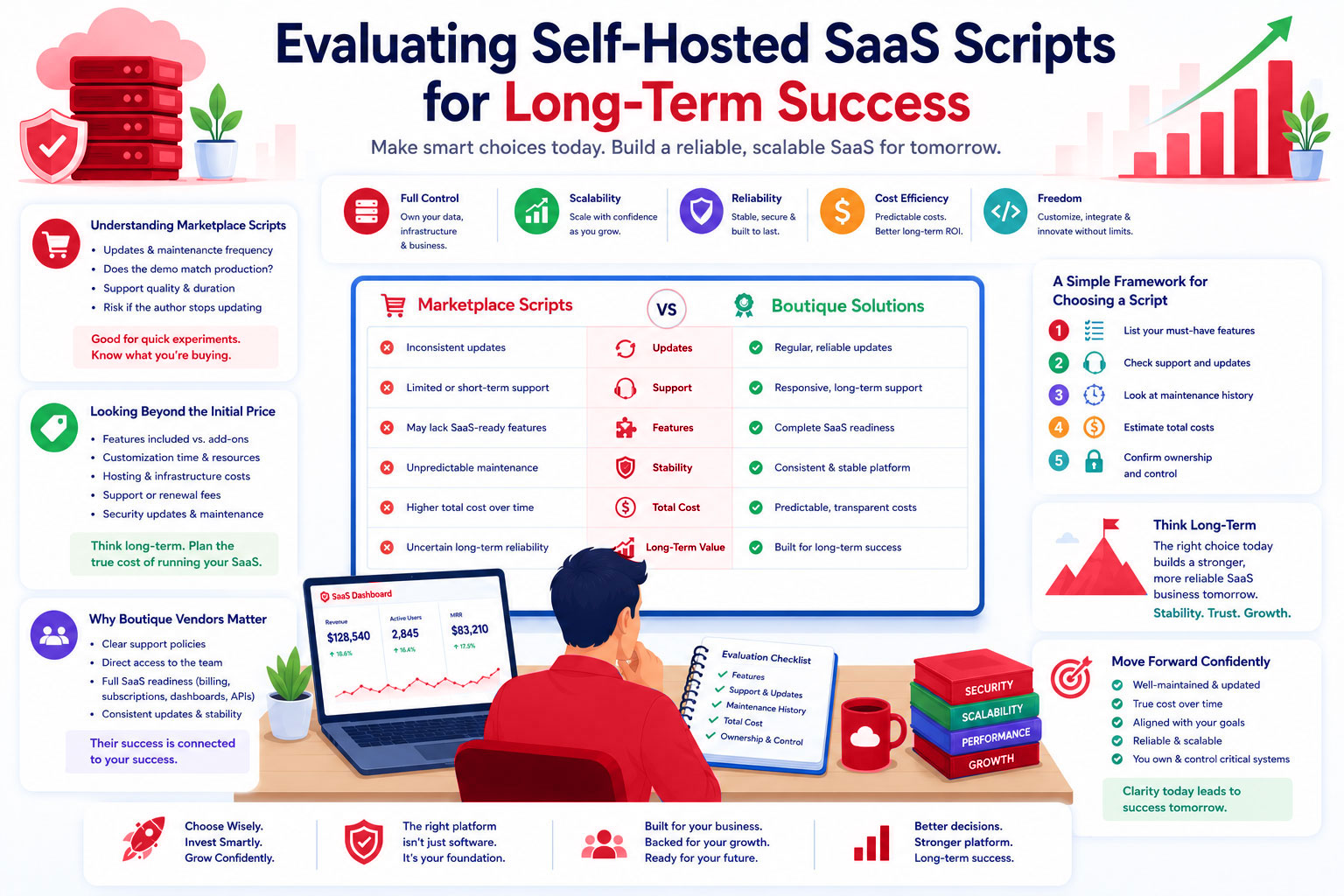
As the world of self-hosted SaaS grows, you have more choices than ever. From online marketplaces to boutique vendors, there are plenty of scripts that promise speed, flexibility, and affordability. But building a SaaS business isn’t just about picking software. It’s a long-term investment that affects your time, money, and the experience of your customers.
This guide is here to help you think clearly about your options and make smart decisions for your business.
Understanding Marketplace Scripts
Marketplaces make it easy for developers to sell their scripts to a wide audience. That convenience comes with trade-offs. These platforms often prioritize new listings and sales volume over long-term reliability.
When looking at a script from a marketplace, ask yourself:
- How often is it updated and maintained?
- Does the demo actually match what you need for production?
- What kind of support is included, and how long does it last?
- How easy is it to continue using the script if the original author stops updating it?
Marketplace scripts can be a great way to experiment quickly or test ideas. The key is understanding what you’re buying and what it will take to keep it running smoothly.
Looking Beyond the Initial Price
The sticker price of a script only tells part of the story. When evaluating software, consider the total cost over the next few years. Think about:
- Which features are included and which will need add-ons
- Time and resources needed for customization
- Hosting and infrastructure costs
- Ongoing support or renewal fees
- Security updates and maintenance
By thinking long-term, you can avoid surprises and plan for the true cost of running your SaaS.
Why Boutique Vendors Matter
Boutique SaaS vendors operate a bit differently. Their business depends on your success, so they often provide:
- Clear support policies and defined update schedules
- Direct communication with the team behind the product
- Full SaaS readiness, including billing, subscriptions, dashboards, and APIs
- Consistent maintenance and stability
The goal isn’t to say boutique vendors are better than marketplaces. It’s about finding the right fit for your goals, risk tolerance, and growth plans.
A Simple Framework for Choosing a Script
Here’s a practical approach you can use when evaluating any self-hosted SaaS product:
- List your must-have features – figure out what you absolutely need for your business to run smoothly.
- Check support and updates – make sure you know how long support lasts and what updates are included.
- Look at maintenance history – see how often updates happen and how responsive the vendor is to issues.
- Estimate total costs – include license, hosting, development, and any add-ons you might need.
- Confirm ownership and control – make sure you can manage customer data, billing, and integrations without hurdles.
Following this framework helps you make choices based on facts and priorities, not just price or marketing claims.
Thinking Long-Term
A successful SaaS business depends on stability, reliability, and trust. Marketplace scripts can work well for quick experiments, while boutique solutions can provide more predictability for revenue-generating products. The right decision depends on your goals, your team, and your appetite for risk.
By taking a thoughtful, long-term approach, you can pick a script that supports your business rather than creating unexpected headaches later.
How to Move Forward Confidently
Choosing a self-hosted SaaS script is a strategic decision that affects your operations, growth, and customer experience. Instead of focusing only on price or marketing claims, think about:
- How the product is maintained and updated
- What the true cost will be over time
- How well it aligns with your business goals
- How reliable and scalable it is
- Who owns and controls critical systems
Being aware of these factors helps you make decisions that protect your resources and set your SaaS up for long-term success.
Clarity and careful evaluation are your most valuable tools as you navigate a growing ecosystem of scripts and platforms.