
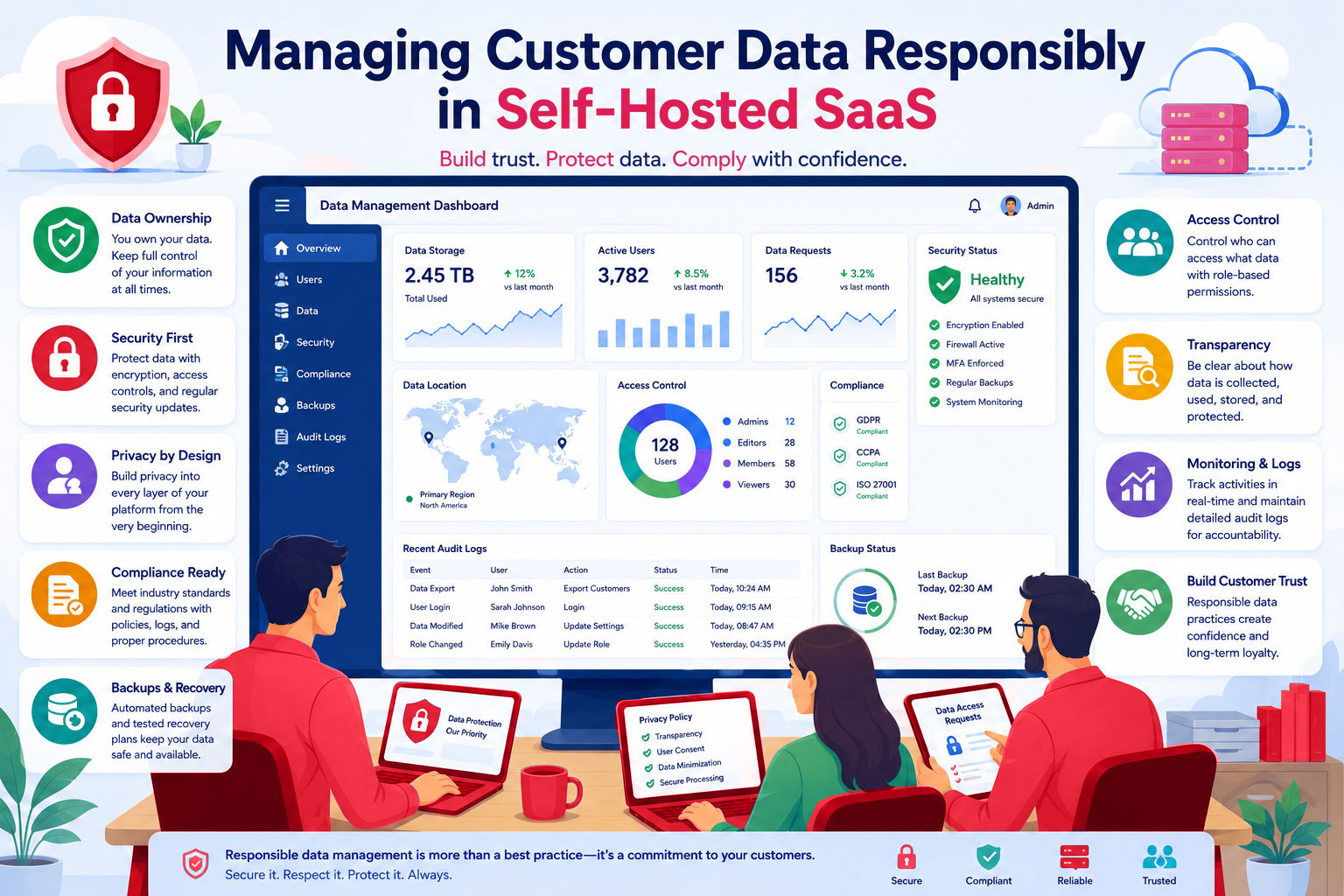
Customer data is one of the most valuable assets within any SaaS business. It powers personalization, supports decision-making, and helps organizations deliver better experiences. At the same time, managing data responsibly requires thoughtful processes, clear policies, and a commitment to maintaining trust.
For businesses operating self-hosted SaaS platforms, responsible data management offers a unique advantage. Ownership and control remain in your hands, allowing you to build systems that align with your business requirements while maintaining transparency and accountability.
This guide explores practical approaches to managing customer data responsibly while supporting growth, security, and long-term customer confidence.
Understand the Responsibility That Comes with Ownership
One of the defining benefits of self-hosted SaaS is control over your infrastructure and customer information.
With that control comes responsibility.
Organizations should clearly understand:
- What customer data is being collected
- Why it is being collected
- How it is stored and processed
- Who has access to it
- How long it is retained
Establishing these foundations early creates clarity for both your team and your customers.
Responsible data management begins with understanding the full lifecycle of the information entrusted to your platform.
Collect Data with Purpose
Successful SaaS businesses focus on collecting information that delivers genuine value.
Rather than gathering data simply because it is available, consider how each piece of information supports:
- Customer onboarding
- Product functionality
- Service delivery
- Reporting and analytics
- Customer support
Purpose-driven data collection simplifies compliance efforts while helping maintain customer confidence.
Customers appreciate transparency and are more likely to trust businesses that demonstrate restraint and intentionality.
Prioritize Security at Every Level
Protecting customer information should be integrated into every layer of your platform.
Key security practices include:
- Strong authentication policies
- Role-based access controls
- Data encryption in transit and at rest
- Regular software updates
- Continuous security monitoring