
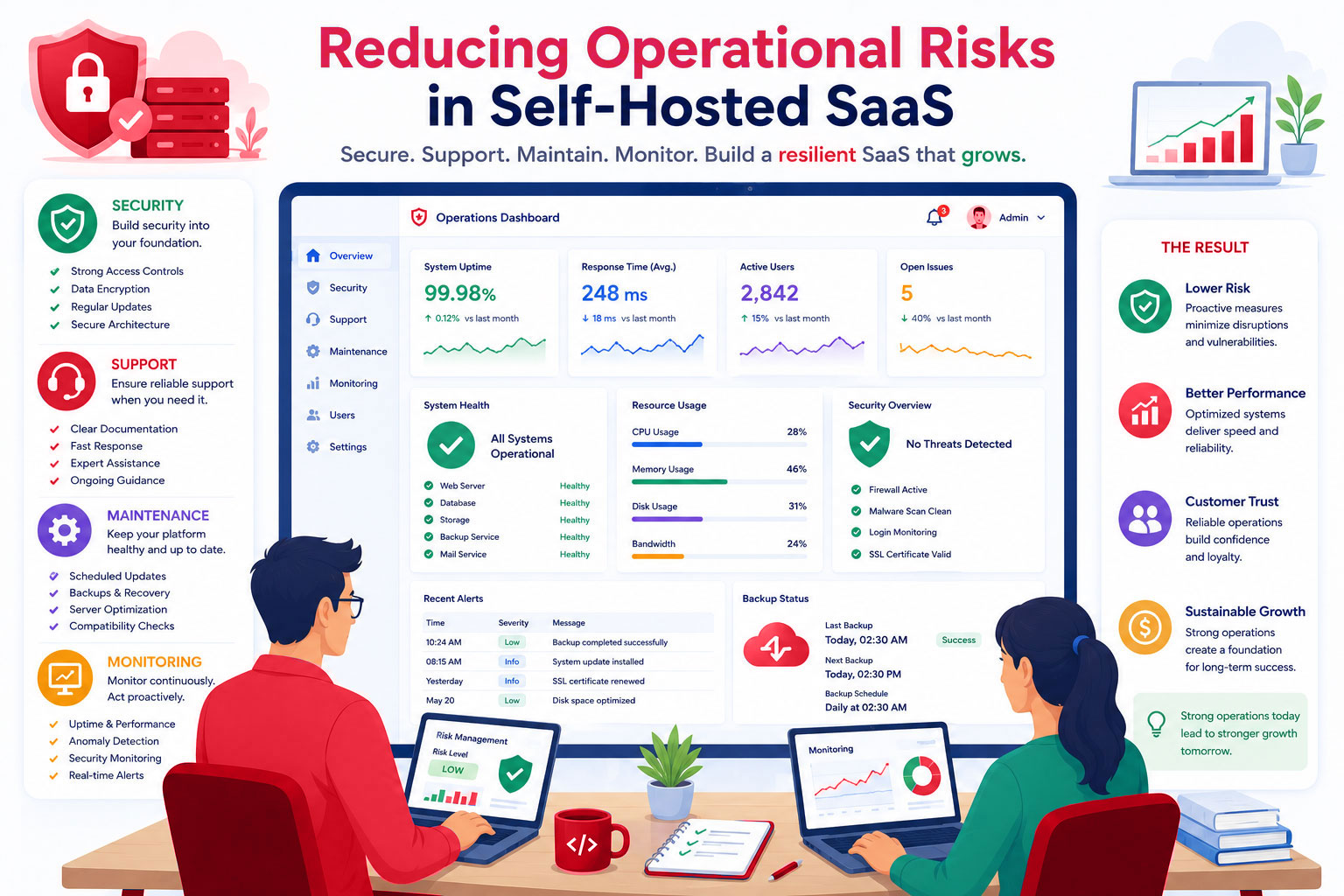
Operating a self-hosted SaaS platform offers flexibility, ownership, and control. With that control comes responsibility: maintaining security, ensuring uptime, and managing ongoing improvements.
Reducing operational risk is not about avoiding growth. It’s about building a structured, resilient system that supports long-term success. Leaders who approach operations strategically create SaaS businesses that are stable, scalable, and trusted by their customers.
This guide focuses on four core pillars: security, support, maintenance, and monitoring.
Build Security Into the Foundation
Security should never be an afterthought. In a self-hosted environment, it becomes part of your infrastructure strategy from day one.
Key considerations include:
- Strong authentication and access controls
- Encrypted data storage and secure transmission
- Regular software updates and patch management
- Controlled access to servers and databases
A professional self-hosted platform makes these measures manageable by offering structured permissions, documented update processes, and secure architecture standards.
When security is proactive rather than reactive, operational risk decreases significantly.
Establish Reliable Support Channels
Even the most robust systems require guidance and expertise at times. Reliable support ensures that small technical issues do not become operational disruptions.
- Effective support includes:
- Clear documentation
- Defined response processes
- Access to knowledgeable technical assistance
- Structured update and upgrade guidance
Ongoing support and renewal plans are not just optional add-ons. They provide continuity, ensuring your platform evolves with changing technologies and business requirements.
Professional support transforms uncertainty into confidence.
Prioritize Structured Maintenance
Maintenance is often underestimated in SaaS operations. However, consistent and organized maintenance protects performance and reduces unexpected downtime.
- A disciplined maintenance routine includes:
- Scheduled updates and version control
- Backup management and disaster recovery planning
- Server optimization and database management
- Compatibility checks with third-party integrations
When maintenance becomes part of your operational rhythm, your system remains efficient and resilient.
Predictability reduces risk. Structure strengthens stability.
Implement Continuous Monitoring
Monitoring gives leaders visibility. Without it, decisions are reactive. With it, they are strategic.
- Monitoring best practices include:
- Performance tracking for uptime and speed
- Usage analytics to detect anomalies
- Security monitoring for unusual access patterns
- System alerts for errors or failures
Modern SaaS platforms often include dashboards and reporting tools that provide this visibility in real time.
When you can see your system clearly, you can manage it confidently.
A Leadership Perspective on Risk
Operational risk management is not about limiting innovation. It is about creating a reliable environment where innovation can thrive.
Leaders who invest in security, structured maintenance, professional support, and proactive monitoring build platforms that customers trust. That trust becomes a competitive advantage.
Self-hosted SaaS offers independence and flexibility. When supported by disciplined operations, it becomes a powerful foundation for sustainable growth.
Reducing risk is not about caution alone. It is about building strength into every layer of your business.