
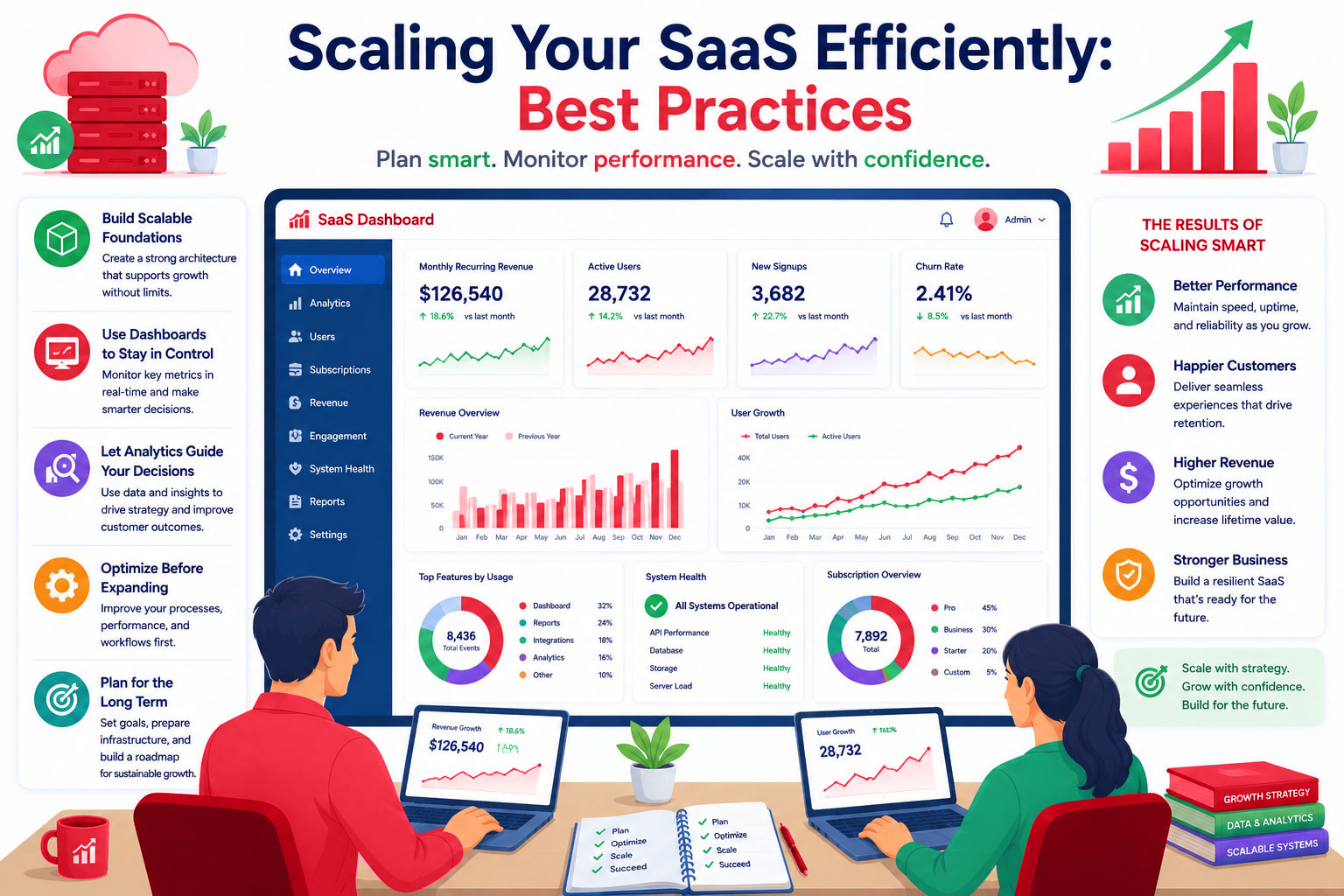
Growth is an exciting phase for any SaaS business. It signals that your product is gaining traction and your systems are working. At the same time, scaling introduces new challenges that require thoughtful planning, reliable tools, and clear visibility into your operations.
Scaling efficiently is not just about growing faster. It’s about growing in a way that remains stable, predictable, and aligned with your long-term goals.
This guide explores practical approaches to scaling your SaaS through better use of dashboards, analytics, and strategic planning.
Build with Scalable Foundations
Efficient scaling starts with the right foundation. A well-structured SaaS platform allows you to grow without constantly reworking your systems.
Focus on:
- Flexible architecture that supports increasing users and data
- Modular features that can expand without disrupting existing workflows
- Reliable infrastructure that maintains performance under load
When your foundation is built for growth, scaling becomes a natural progression rather than a technical challenge.
Use Dashboards to Stay in Control
As your SaaS grows, visibility becomes essential. Dashboards provide a clear, real-time view of how your business is performing.
Effective dashboards help you track:
- User activity and engagement
- Revenue trends and subscription performance
- System health and uptime
- Key operational metrics
With the right dashboards in place, decisions become faster and more informed. You can identify opportunities early and address issues before they impact your users.
Let Analytics Guide Your Decisions
Data plays a central role in efficient scaling. Instead of relying on assumptions, successful SaaS teams use analytics to guide their strategy.
Key areas to analyze include:
- Customer behavior and usage patterns
- Conversion and retention rates
- Feature adoption across your platform
- Growth trends over time
Analytics allows you to focus your efforts where they matter most, improving both customer experience and business performance.
Optimize Before Expanding
Growth does not always mean adding more. Often, the most effective scaling comes from refining what already exists.
Consider:
- Streamlining onboarding to improve user adoption
- Simplifying workflows to reduce friction
- Improving performance to enhance user experience
- Automating repetitive processes to save time
Optimization ensures that your platform is efficient at every stage of growth.
Plan for the Long Term
Sustainable scaling requires a forward-looking mindset. Instead of reacting to growth, plan for it.
A strong long-term approach includes:
- Setting realistic growth milestones
- Preparing infrastructure for increased demand
- Aligning product development with customer needs
- Maintaining a clear roadmap for future features and improvements
Planning ahead reduces uncertainty and allows your business to scale with confidence.
A Leadership Perspective on Growth
Efficient scaling is a balance between ambition and structure. Leaders who approach growth with clarity and discipline build SaaS platforms that are not only larger, but stronger.
The combination of reliable systems, clear data, and thoughtful planning creates a business that can adapt, evolve, and continue delivering value to customers.
Scaling becomes more than expansion. It becomes a process of building a platform that is ready for the future.